Operating a commercial kitchen in Jeddah presents challenges that businesses in inland cities may not experience to the same degree. Located along Saudi Arabia’s Red Sea coast, Jeddah experiences warm conditions, coastal humidity, and exposure to salt-laden air.
For restaurants, hotels, catering facilities, and central kitchens, these environmental factors can influence the performance and lifespan of professional kitchen equipment.
Commercial kitchen equipment maintenance in Jeddah is therefore about more than routine cleaning and occasional repairs. Businesses need a preventive maintenance strategy that considers corrosion, moisture, refrigeration performance, ventilation, and equipment reliability.
Without proper maintenance, environmental exposure can contribute to deterioration, equipment breakdowns, increased energy consumption, and costly operational interruptions.
This guide explains seven important maintenance considerations that foodservice businesses in Jeddah should understand.
1. Understand How Jeddah’s Coastal Climate Affects Kitchen Equipment
Jeddah’s location along the Red Sea creates environmental conditions that can accelerate equipment deterioration, particularly in facilities exposed to outdoor air.
Three factors deserve attention.
Humidity: Moisture can contribute to condensation, corrosion, and electrical problems, especially when equipment is poorly protected or installed in unsuitable environments.
Salt exposure: Airborne salts can settle on metal surfaces and contribute to corrosion. Equipment installed near open coastal areas, exterior ventilation openings, or exposed service spaces may be particularly vulnerable.
High temperatures: Warm ambient conditions can increase the demands placed on refrigeration and cooling systems, particularly when ventilation and equipment clearances are inadequate.
Not every commercial kitchen in Jeddah experiences the same exposure. An enclosed, well-conditioned hotel kitchen may face different risks from a waterfront restaurant with outdoor equipment or a poorly ventilated service area.
For this reason, maintenance planning should begin with a realistic assessment of the equipment’s location and operating environment.
2. Protect Stainless Steel Equipment Against Corrosion
Stainless steel is widely used in commercial kitchens because it offers durability, cleanability, and corrosion resistance.
However, stainless steel is not completely immune to corrosion.
Coastal salts, harsh cleaning chemicals, damaged protective surfaces, and prolonged moisture exposure can contribute to staining, pitting, or deterioration.
For commercial kitchen equipment maintenance in Jeddah, businesses should adopt appropriate cleaning and inspection practices.
Recommended measures include:
Clean stainless steel surfaces using manufacturer-approved products.
Remove salt deposits and food residues regularly.
Rinse cleaning chemicals where instructed and dry surfaces thoroughly.
Avoid steel wool and tools that can contaminate or damage stainless steel.
Avoid inappropriate chlorine-based cleaners or prolonged chemical contact.
Inspect joints, welds, fasteners, and difficult-to-clean areas for early corrosion.
When selecting new stainless steel equipment, ask suppliers about material grade, finish, intended exposure, and cleaning requirements.
For certain chloride-exposed environments, a higher corrosion-resistant grade may be appropriate, but the correct specification depends on the application and conditions.
Saudi Elan provides stainless steel fabrication services for professional kitchen counters, sinks, shelving, and workstations.
3. Give Commercial Refrigeration Systems Extra Attention
Refrigeration is one of the most critical systems in a commercial kitchen.
Restaurants and hotels depend on refrigerators, freezers, and cold rooms to store ingredients at appropriate temperatures.
In Jeddah’s warm coastal environment, refrigeration systems may experience additional operating demands, particularly where condenser units are exposed to high ambient temperatures, restricted airflow, or corrosive outdoor conditions.
A structured refrigeration maintenance program should include:
Inspecting condenser coils for dirt, grease, and corrosion
Checking door gaskets and seals
Monitoring operating temperatures
Maintaining adequate ventilation around equipment
Checking condensate drainage
Inspecting exposed metal components
Scheduling professional refrigeration servicing
Dirty condenser coils can reduce heat-transfer efficiency, while damaged door seals can allow warm, humid air to enter refrigerated compartments.
The US Environmental Protection Agency’s ENERGY STAR guidance recommends cleaning refrigerator coils and replacing defective door gaskets as part of energy-saving maintenance.
ENERGY STAR – Energy-Saving Checklists
Refrigerant handling, electrical repairs, and sealed-system work should be performed by qualified technicians.
4. Maintain Ventilation and Exhaust Systems
Commercial kitchen ventilation removes cooking fumes, heat, grease-laden vapors, and other contaminants.
When ventilation systems are not properly maintained, kitchens may experience higher indoor temperatures, reduced comfort, and excessive grease accumulation.
In humid coastal environments, moisture management can also become an important consideration.
Maintenance should include inspecting exhaust hoods, cleaning grease filters, checking fan operation, and evaluating ductwork and exposed components.
The cleaning frequency should reflect cooking volume, grease production, applicable fire-safety requirements, and the system manufacturer’s recommendations.
Ventilation maintenance should also be coordinated with the building’s air-conditioning and replacement-air systems.
For larger projects, Saudi Elan’s Technical Engineering Support includes mechanical, electrical, and plumbing coordination for professional kitchen installations.
5. Inspect Electrical Components for Moisture-Related Problems
Modern commercial kitchens rely heavily on electrical equipment, including ovens, dishwashers, refrigeration systems, mixers, and programmable cooking appliances.
Moisture and corrosion can affect electrical terminals, connectors, enclosures, and control systems when they are inadequately protected.
Businesses should look for warning signs such as:
Unusual equipment shutdowns
Repeated electrical faults
Visible corrosion on exposed components
Damaged seals or cable entries
Moisture inside accessible external enclosures
Unexpected control-panel errors
Kitchen staff should report these issues rather than attempt electrical repairs themselves.
Qualified technicians should inspect and test electrical equipment according to the manufacturer’s requirements and applicable safety procedures.
Preventive maintenance can help identify deterioration before it causes a more serious operational interruption.
6. Follow a Preventive Maintenance Schedule
One of the most effective ways to protect professional kitchen equipment is to establish a maintenance schedule based on equipment type, operating hours, manufacturer recommendations, and environmental exposure.
For commercial kitchen equipment maintenance in Jeddah, businesses should consider more frequent inspections of equipment exposed to coastal air, moisture, or high operating temperatures.
A practical maintenance plan might include the following activities:
| Frequency | Recommended Maintenance Activities |
|---|---|
| Daily | Clean food-contact surfaces, check refrigeration temperatures, inspect visible leaks, and report unusual equipment behavior |
| Weekly | Inspect door gaskets, accessible filters, exposed stainless steel, and drainage areas |
| Monthly | Check for corrosion, inspect accessible condenser areas, review equipment performance, and examine exposed ventilation components |
| Quarterly | Arrange professional inspections of critical cooking, refrigeration, and electrical equipment where appropriate |
| Annually | Conduct comprehensive equipment servicing, performance assessments, and maintenance-plan reviews |
These are illustrative intervals, not universal servicing requirements. The final schedule should follow manufacturer instructions, equipment risk, actual operating conditions, and applicable regulations.
For example, refrigeration equipment in a high-volume waterfront restaurant may require different attention from similar equipment installed inside a well-conditioned commercial facility.
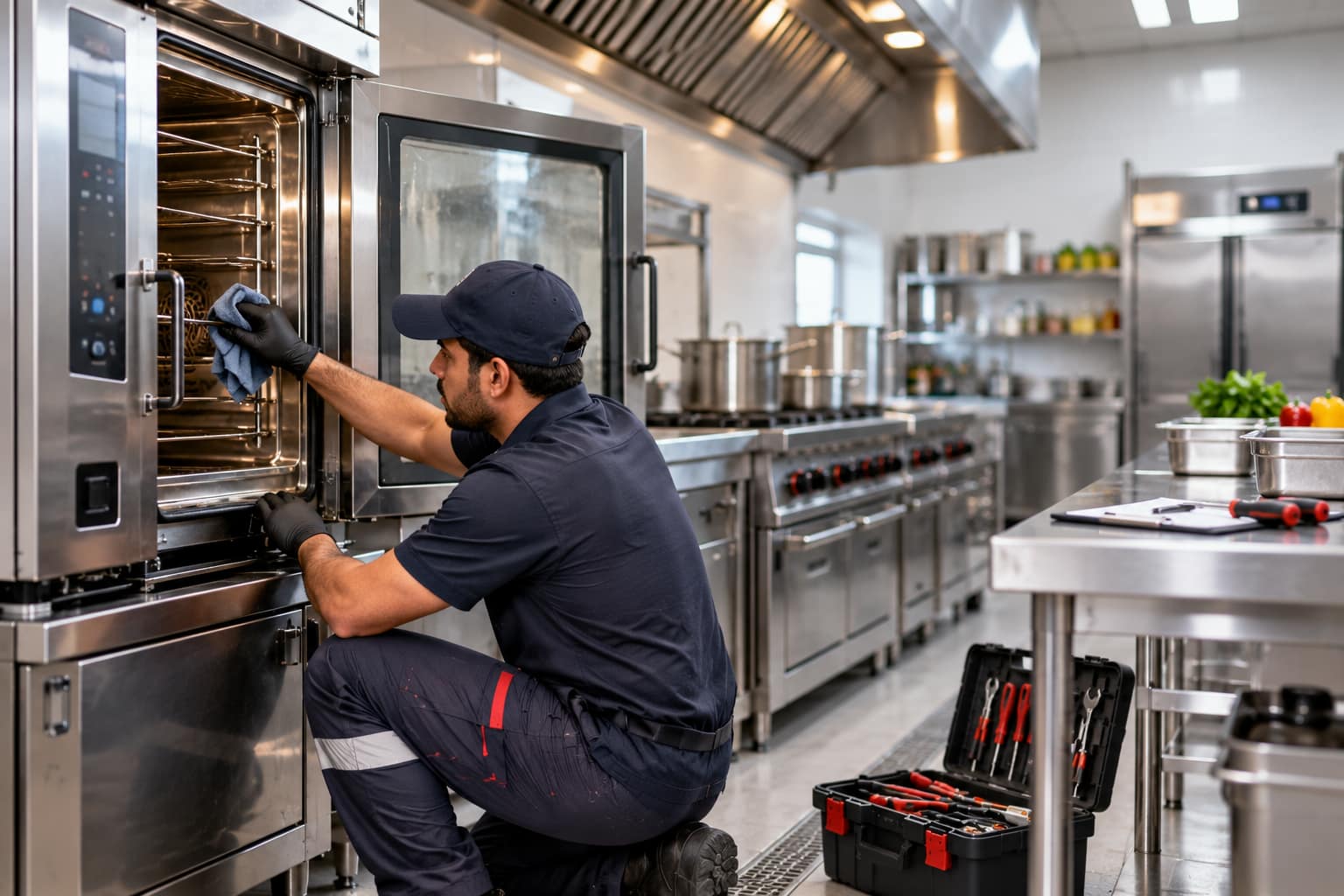
Saudi Elan offers preventive maintenance and repair services, including inspections, scheduled servicing, and emergency technical support.
7. Choose a Maintenance Provider With Local Technical Support
When a critical kitchen appliance breaks down, the consequences can extend beyond the cost of repairs.
A malfunctioning refrigerator can place stored ingredients at risk, while an oven failure can interrupt food production during peak service hours.
This is why restaurants and hospitality businesses should consider after-sales support when selecting commercial kitchen equipment.
Important factors include:
Availability of qualified technicians
Preventive maintenance contracts
Spare-parts availability
Emergency repair arrangements
Equipment inspection and calibration
Manufacturer-specific technical knowledge
Maintenance records and service documentation
Businesses should also ask whether the maintenance provider understands the environmental conditions affecting equipment in coastal cities.
Saudi Elan operates a branch in Jeddah and provides commercial kitchen equipment maintenance, technical support, and after-sales services in Saudi Arabia.
Its After-Sales Service includes preventive maintenance visits, troubleshooting, repair support, and spare-parts assistance.
Why Preventive Maintenance Matters for Jeddah Restaurants and Hotels
The benefits of preventive maintenance extend beyond keeping individual machines operational.
A structured maintenance program can help businesses reduce unexpected downtime, identify corrosion before it spreads, maintain more consistent equipment performance, and avoid unnecessary replacement costs.
It can also support food safety by helping refrigeration, cooking, and washing equipment operate as intended.
For hotels, catering operations, and central kitchens handling large production volumes, equipment reliability is particularly important because a single failure can disrupt several stages of food preparation.
Businesses should therefore treat maintenance as part of operational planning rather than an occasional expense.
Common Maintenance Mistakes Businesses Should Avoid
Some maintenance practices can unintentionally increase equipment problems.
For example, using unsuitable cleaning chemicals on stainless steel can damage surfaces, while failing to remove accumulated grease from ventilation systems can create operational and safety concerns.
Other common mistakes include ignoring early corrosion, delaying replacement of damaged refrigerator door seals, blocking ventilation openings, and operating equipment after repeated electrical faults.
Another mistake is relying exclusively on emergency repairs.
A better approach combines daily staff checks with scheduled professional servicing.
For additional guidance, read Saudi Elan’s article on commercial kitchen equipment servicing.
Frequently Asked Questions
Why is commercial kitchen equipment maintenance in Jeddah important?
Jeddah’s coastal environment can expose equipment to humidity, airborne salts, and warm ambient conditions. Proper maintenance helps identify corrosion, protect equipment performance, and reduce unexpected breakdowns.
Does coastal humidity damage stainless steel kitchen equipment?
Humidity and chloride exposure can contribute to corrosion, particularly when surfaces are poorly maintained or unsuitable materials are used. Regular cleaning, drying, inspections, and appropriate material selection help reduce these risks.
How often should commercial kitchen equipment be serviced in Jeddah?
Servicing frequency depends on equipment type, usage, manufacturer recommendations, and environmental exposure. High-use or coastal-exposed equipment may need more frequent inspections than equipment operating in protected indoor environments.
What commercial kitchen equipment needs the most maintenance?
Refrigeration systems, cooking equipment, ventilation systems, dishwashers, and electrically controlled appliances all require routine attention. The maintenance priorities depend on equipment condition and operational importance.
How can restaurants prevent corrosion on kitchen equipment?
Use manufacturer-approved cleaning products, remove salt and moisture deposits, avoid damaging cleaning tools, inspect exposed metal components, and choose materials suited to the operating environment.
Does Saudi Elan provide commercial kitchen maintenance in Jeddah?
Saudi Elan has a Jeddah branch and offers professional repair, preventive maintenance, and after-sales support for commercial kitchen equipment. Businesses should confirm service scope and availability for their specific equipment.
Conclusion
Commercial kitchen equipment maintenance in Jeddah requires particular attention to coastal environmental conditions.
Humidity, salt exposure, and warm temperatures can create additional maintenance challenges for refrigeration systems, stainless steel surfaces, electrical components, and ventilation equipment.
However, these risks can be managed through appropriate equipment selection, regular cleaning, preventive inspections, professional servicing, and timely repairs.
For restaurants, hotels, cafés, and catering businesses, investing in preventive maintenance is an important step toward reliable operations and long-term equipment performance.
A well-maintained commercial kitchen is better prepared to handle daily production demands while reducing avoidable downtime and repair costs.
Need Commercial Kitchen Equipment Maintenance in Jeddah?
Saudi Elan supports restaurants, hotels, catering businesses, and professional foodservice operations with equipment maintenance, technical inspections, troubleshooting, and repair services.
Whether you need routine preventive servicing or technical assistance with existing equipment, Saudi Elan can help you evaluate your maintenance requirements.
Explore Saudi Elan’s Repair & Maintenance Services to discuss your commercial kitchen equipment needs.