

7 Smart Kitchen Layouts Improve Staff Productivity & Safety: Commercial Kitchens
Smart kitchen layouts improve staff productivity and safety commercial kitchens by optimizing workflow, reducing unnecessary movement, minimizing workplace hazards, and creating clearly defined work zones. In commercial kitchens, a well-planned layout helps teams work faster, reduces operational errors, improves food safety, and supports a safer working environment.
For restaurants, hotels, hospitals, catering facilities, and central kitchens in Saudi Arabia, smart kitchen layouts are becoming essential for maintaining efficiency and meeting modern operational demands.
Why Smart Kitchen Layouts Matter in Commercial Kitchens
Commercial kitchens are high-pressure environments where staff must coordinate multiple tasks simultaneously. Poor layouts often create bottlenecks, increase fatigue, and expose employees to safety risks.
A smart kitchen layout helps:
- Improve workflow efficiency
- Increase staff productivity
- Reduce workplace accidents
- Support food safety compliance
- Enhance team coordination
- Improve operational consistency
In Saudi Arabia’s growing hospitality and food service industry, efficient kitchen design directly impacts service quality and profitability.
What Defines a Smart Kitchen Layout?
A smart kitchen layout is designed around operational flow rather than available space alone.
It strategically positions:
- Cooking equipment
- Preparation stations
- Storage areas
- Washing zones
- Service counters
The objective is to create a workspace where staff can perform tasks efficiently without unnecessary movement or operational disruption.
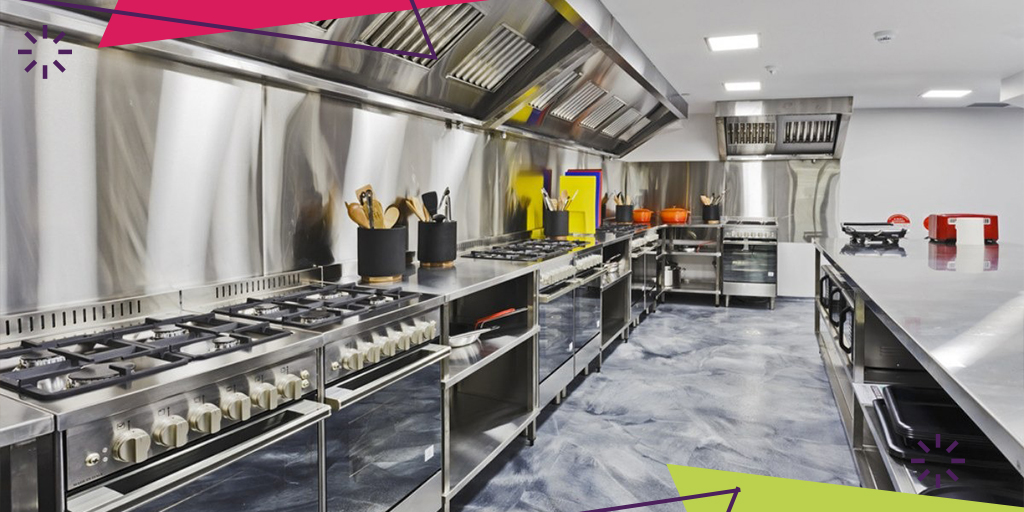
1. Improved Workflow Through Logical Zoning
One of the biggest advantages of a smart kitchen layout is improved workflow.
Commercial kitchens operate more efficiently when workstations follow a logical sequence:
- Receiving
- Storage
- Preparation
- Cooking
- Service
- Cleaning
When these zones are properly organized, staff move naturally through the workflow without congestion or delays.
Benefits of Logical Zoning
- Faster food preparation
- Reduced waiting times
- Better task coordination
- Improved operational efficiency
2. Reduced Staff Movement & Physical Fatigue
Excessive walking and repetitive movement reduce productivity and increase fatigue.
Poor kitchen layouts often force employees to:
- Walk long distances
- Carry heavy items repeatedly
- Navigate crowded workspaces
Smart layouts position frequently used equipment and ingredients within easy reach.
Benefits
- Reduced physical strain
- Improved staff comfort
- Faster task completion
- Increased productivity during long shifts
3. Enhanced Workplace Safety
Safety is one of the most important benefits of smart kitchen planning.
Commercial kitchens contain:
- Hot surfaces
- Sharp equipment
- Wet floors
- High-traffic areas
Poor layouts increase the risk of:
- Slips and falls
- Burns
- Cuts
- Staff collisions
How Smart Layouts Improve Safety
- Clear circulation paths
- Separated hot and cold zones
- Organized workstations
- Reduced congestion
These features create a safer working environment and reduce workplace accidents.
4. Better Food Safety & Hygiene Control
Food safety depends heavily on kitchen design.
A smart layout clearly separates:
- Raw food preparation
- Cooking areas
- Plating stations
- Cleaning zones
This reduces cross-contamination risks and supports compliance with food safety regulations.
Hygiene Benefits
- Easier cleaning procedures
- Better sanitation control
- Improved inspection readiness
- Safer food handling practices
5. Faster Task Completion & Team Coordination
When workstations are clearly organized, staff spend less time searching for equipment, ingredients, or workspace.
Smart kitchen layouts improve communication between:
- Chefs
- Preparation staff
- Service teams
- Cleaning personnel
Results
- Faster service
- Better teamwork
- Fewer operational interruptions
- Increased output during peak hours
6. Improved Visibility & Supervision
Smart kitchen layouts create clear sightlines across the workspace.
This allows managers to:
- Monitor operations efficiently
- Identify workflow issues quickly
- Improve team coordination
- Respond to problems faster
Improved visibility supports better operational control and enhances staff performance.
7. Strategic Equipment Placement
Equipment placement has a direct impact on productivity and safety.
Smart kitchen layouts position equipment according to:
- Frequency of use
- Heat output
- Workflow requirements
- Operational priorities
Benefits
- Improved workflow
- Reduced heat exposure
- Better equipment performance
- Lower accident risk
Well-positioned equipment helps staff work efficiently while maintaining a safe environment.
8. Higher Staff Morale & Job Satisfaction
Organized work environments reduce stress and frustration.
A smart kitchen layout creates:
- Clear responsibilities
- Efficient workflows
- Reduced operational confusion
This improves:
- Staff confidence
- Job satisfaction
- Team morale
- Employee retention
In large-scale commercial kitchens, positive working conditions contribute to long-term operational success.
9. Better Performance During Peak Operations
Commercial kitchens often experience sudden increases in demand.
Smart layouts are designed to handle:
- High production volumes
- Multiple teams working simultaneously
- Fast-paced service periods
Benefits During Peak Hours
- Reduced bottlenecks
- Faster service delivery
- Improved workflow management
- Consistent operational performance
10. Long-Term Operational Benefits
The advantages of smart kitchen layouts extend beyond daily operations.
Long-term benefits include:
- Lower maintenance costs
- Reduced equipment wear
- Improved operational efficiency
- Easier future upgrades
- Better scalability
Businesses that invest in smart kitchen planning often achieve higher returns over the lifetime of their facilities.
Key Takeaways
- Smart kitchen layouts improve productivity and staff safety.
- Logical zoning reduces workflow interruptions.
- Strategic equipment placement improves efficiency.
- Clear circulation paths reduce workplace accidents.
- Proper hygiene zoning supports food safety compliance.
- Smart layouts improve staff morale and operational consistency.
- Efficient kitchen design supports long-term business growth.
Industry Insight
Studies indicate that optimized commercial kitchen layouts can significantly improve staff productivity by reducing unnecessary movement and improving workflow efficiency, resulting in faster service and lower operational costs.
Future Trends in Smart Kitchen Design
Modern commercial kitchens are increasingly adopting:
- AI-powered kitchen management systems
- IoT-enabled equipment monitoring
- Automated food preparation systems
- Energy-efficient kitchen solutions
- Smart workflow analytics
These innovations help improve productivity, safety, and operational performance while supporting sustainability goals.
FAQs
What is a smart kitchen layout?
A smart kitchen layout is a kitchen design that optimizes workflow, safety, and efficiency through strategic zoning and equipment placement.
How do smart kitchen layouts improve productivity?
They reduce unnecessary movement, improve workflow efficiency, and help staff complete tasks faster.
Why is kitchen layout important for safety?
A proper layout reduces congestion, prevents accidents, and creates clear movement pathways for staff.
Can smart kitchen layouts improve food safety?
Yes. Proper zoning separates raw and cooked food areas, reducing contamination risks.
Are smart kitchen layouts suitable for large-scale operations?
Yes. They are especially beneficial for hotels, hospitals, catering facilities, and central kitchens that handle high production volumes.
How do smart layouts improve staff morale?
Organized workspaces reduce stress, improve communication, and create a more productive work environment.
Conclusion
Smart kitchen layouts are no longer a luxury—they are a necessity for modern commercial kitchens. By improving workflow, reducing physical strain, enhancing safety, and supporting food safety compliance, smart layouts create a more productive and efficient workplace.
For organizations operating in Saudi Arabia’s competitive hospitality and food service sectors, investing in intelligent kitchen planning helps improve operational performance, staff satisfaction, and long-term business success.
A well-designed kitchen supports not only daily operations but also future growth, making smart kitchen layouts one of the most valuable investments a business can make.
Call to Action
Looking to improve staff productivity and safety in your commercial kitchen?
Contact Saudi Elan today for expert commercial kitchen planning, smart kitchen layouts, equipment integration, and turnkey kitchen solutions tailored to your operational requirements.